Saleem Sinai
Midnight's ChildrenSaleem Sinai’s life begins at the exact moment India becomes independent, and that coincidence becomes the governing pattern of his identity: he understands himself as bound to the nation’s history, even when events expose the limits of his control and the unreliability of his account. Born to one family but raised by another after a name-tag exchange, he grows into a telepath, a soldier, an exile, and an autobiographer who preserves his memories in both writing and chutney. His story makes the individual body a contested record of private life and public history.
Identity and Birth
Saleem is born at midnight on August 15, 1947, at Doctor Narlikar’s Nursing Home in Bombay, at the precise instant of India’s independence. Fireworks and crowds mark the public occasion. His father, Ahmed Sinai, breaks a toe shortly afterward, but Saleem interprets his own birth as the more consequential event: the clock hands seem to greet him, and he describes himself as handcuffed to history. For the next three decades, he believes that his fate and his country’s are inseparable.
That connection is public almost from the beginning. Saleem recalls that newspapers celebrate his arrival and politicians endorse its historical importance; even before Ahmed learns of the birth, the announcement has reached the assembled people. Jawaharlal Nehru sends a letter congratulating the newborn and predicting that his life will, in a sense, mirror India’s. Saleem is thus made a public figure before he can speak or choose a role for himself. The prophecy supplies a framework for his autobiography, but it also burdens him with the expectation that a single life can represent a vast and changing country.
The story’s account of his parentage complicates that public identity. Mary Pereira, acting on her private hopes concerning Joseph D’Costa, exchanges the name-tags on two newborn boys. Saleem, the biological son of Vanita and William Methwold, is raised as the son of Amina and Ahmed Sinai; Shiva, born into the Sinai family, is given Saleem’s birth identity. When the exchange is eventually discovered, Saleem insists that it does not undo the family they have become: Ahmed and Amina remain his parents in the life that matters to them. Biology, class, upbringing, and historical circumstance therefore pull his identity in different directions without resolving into a single, stable origin.
Childhood, Body, and Powers
Saleem’s early life is repeatedly shaped by mishap and bodily vulnerability. As a child he becomes gravely ill with typhoid. His grandfather administers cobra poison, and six hours later Saleem’s temperature returns to normal. The experience saves his life but also introduces the ambiguity that recurs in the novel’s images of snakes and ladders: danger can become a means of survival, though it does not restore the child to his earlier course. His phenomenal growth rate diminishes afterward, with life itself the unexpected compensation.
A later accident in a washing-chest brings on a decisive change in his perception. Through a gap in the laundry, Saleem sees his mother in a private moment and hears her repeat the name Nadir, her former husband. The discovery of this concealed past overwhelms him. When his nose reacts, he describes the episode as an irreversible sniff; the physical response becomes the route by which his mind opens to other people’s voices. At first he experiences them as a confusion of languages, and, unable to ask for comfort, struggles alone to understand what is happening. He eventually interprets the new capacity as a gift of genius.
Saleem’s telepathic gift becomes more expansive after a bicycle accident jolts him into awareness of the other children born around midnight. The children possess different extraordinary abilities, while Saleem’s particular power is to enter the thoughts of others. He and Shiva, both born at the stroke of midnight, form a central contrast: Saleem is associated with access to minds, Shiva with the gifts of war. Saleem’s role in the Midnight Children’s Conference grows from that power, which lets him bring scattered lives into communication and imagine them as a collective.
His body also becomes a record of events that he cannot master. Saleem loses hair and part of a finger, and his face acquires marks he compares to a map. He repeatedly returns to these changes as evidence against his preferred image of himself as the protagonist of his own life. In his account, things happen to him—through family secrets, illness, accidents, and other people’s decisions—yet he continues to claim a place at the center of the story. That tension between being acted upon and insisting on agency shapes both his character and his narration.
History, Exile, and the Loss of Connection
Saleem explains his relationship to history through several modes of connection: he is linked to it literally and metaphorically, actively and passively. The categories acknowledge that he sometimes acts within historical events and sometimes merely suffers their effects. They also complicate Nehru’s image of the child as a mirror of India. Saleem does not present himself as a transparent reflection; he is a partial, self-interested witness who interprets national events through the accidents and obsessions of his own life.
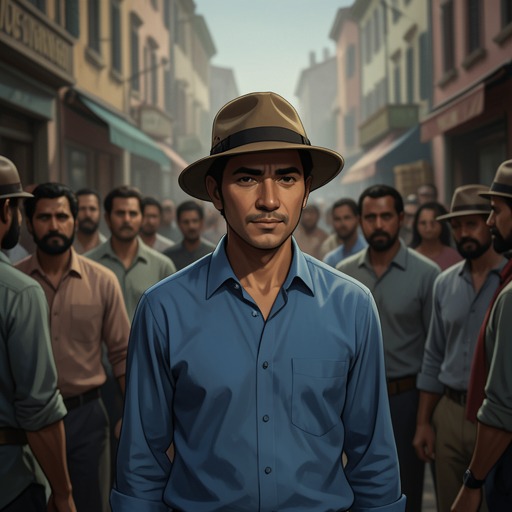
His life in Pakistan marks a period of estrangement from the history with which he once identified. After Jamila Singer’s rejection, he joins the army and becomes a citizen of Pakistan. The narrative presents this change as a kind of beginning again: Saleem, also called the buddha, is emptied of history and learns submission. Yet his talents remain useful to the military. During the operation to arrest Sheikh Mujib-ur-Rahman, Saleem identifies him by smell, using an old shirt supplied to him. The sensory gift that once opened him to a community of minds now serves a state operation, making his connection to power practical as well as symbolic.
In the Sundarbans, Saleem is reunited with his past through snake poison. His memories and speech return, and he tells the child-soldiers the story of his life, beginning with his birth at midnight. The recovered narrative includes family memories and episodes from the history that had seemed lost to him. When the group escapes the forest by boat, a tidal wave carries them through its channels and out of the landscape of ordeal. The journey does not simply restore an intact self: the experience leaves Saleem again vulnerable to the gaps and distortions that mark his recollections.
After the war, Saleem’s name and memory are again precarious. In an abandoned hut, amid the soldiers’ exhaustion, he can recall only old nicknames—Snotnose, Stainface, Baldy, Sniffer, and Piece-of-the-Moon—and cannot summon his own name. He repeats that the situation is unfair. Ayooba, once hostile to him, approaches and offers comfort. The moment makes recollection a social as well as an individual act: Saleem’s companions respond to his distress even when he cannot fully identify himself.
His eventual return to India is physical and narrative. With only a platform ticket, he waits beyond Benares station and jumps onto a departing first-class train, then calls for the door to be opened. The episode reverses the exclusion he has experienced: he is outside, seeking entry, while a familiar voice inside argues that no one should admit fare-dodgers. By the time he makes his way back to the capital, he feels no longer connected to history and understands that an age beginning with his birth has come to an end.
Family, Conflict, and Consequences
Saleem’s family ties are shaped by both affection and concealed knowledge. Amina and Ahmed raise him as their son despite the switched identity, and Saleem maintains that discovering Mary’s act does not erase that bond. His relationship to Shiva is more troubled: the two boys’ simultaneous birth links them as counterparts, but their different upbringings and abilities place them in opposition. Saleem later admits that he lied about Shiva’s death. He does not know where Shiva went after the Widows’ Hostel and says that he remains afraid of his rival, whose unknown fate leaves their conflict unresolved.
The Midnight Children’s Conference is the clearest collective expression of Saleem’s power and responsibility. As its founder, he uses telepathy to reach the children and keep their names, addresses, and faces in his mind. When the authorities seek him, that knowledge makes him uniquely valuable: they capture him because he can locate every child. Under interrogation he reveals what he knows, describing himself as forced into treachery by another person’s betrayal. The founder of the Conference thus presides over its end, and his gift, once a means of connection, becomes the instrument by which the group is exposed.
Saleem’s later nasal operation breaks the connection established in the washing-chest. Its stated purpose is to drain his inflamed sinuses and clear his nasal passages, but its consequence is the loss of telepathy and, with it, his access to the Midnight Children. The change is both physical and historical: the organ through which he sensed others no longer binds him to their lives. He becomes a figure separated from the collective he had tried to gather, even as the memory of that connection continues to define him.
Narration, Preservation, and Ending
Saleem’s account is not a detached record. He acknowledges that he has supplied clues while withholding or reshaping parts of the story, and he confesses to an outright lie about Shiva’s death. He also recognizes that his presentation of the Emergency as a prolonged midnight is romanticized and conflicts with available meteorological evidence. His admissions make the autobiography’s uncertainty part of its subject: memory can preserve the past while changing its shape, and the narrator’s need to give events meaning does not guarantee literal accuracy.
That need becomes urgent as Saleem approaches thirty-one. He fears that his crumbling body will not last and that he will die before his life can mean something. He works quickly, likening the task to Scheherazade’s effort to continue telling stories, because he fears absurdity as much as death. His account repeatedly interrupts chronology with hindsight, rearrangement, and reflection. He describes himself as squeezing crises and transformations from an inexhaustible tube, a figure that connects his experience of history to the act of shaping it into narrative.
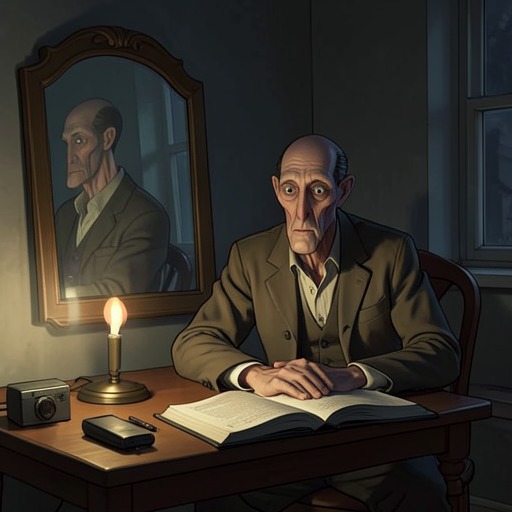
By day, Saleem works among the pickle vats; by night, he writes. His unusually fine sense of smell and his work as a cook are joined to the larger labor of preservation. He presents chutneys and kasaundies as companions to his nocturnal writing: fruit and memory alike are saved from corruption, though never without distortion. At the close of the autobiography, he seals the thirtieth jar, marked Special Formula No. 30: Abracadabra. The jar holds chapters rather than an undistorted past; Saleem accepts that both pickling and remembering leave imperfections.
The ending returns him to the crowds of India and the bodily vulnerability announced at his birth. Saleem foresees that the multitudes will trample him into voiceless dust, and that his son, who is not his son, and later generations will face the same fate. He describes the midnight children as both masters and victims of their times, unable either to preserve privacy or to escape the force of history. The prophecy completes the arc begun at independence: Saleem’s life may not make him master of events, but his voice turns its entanglement, contradictions, and losses into a record that can be opened like a jar.